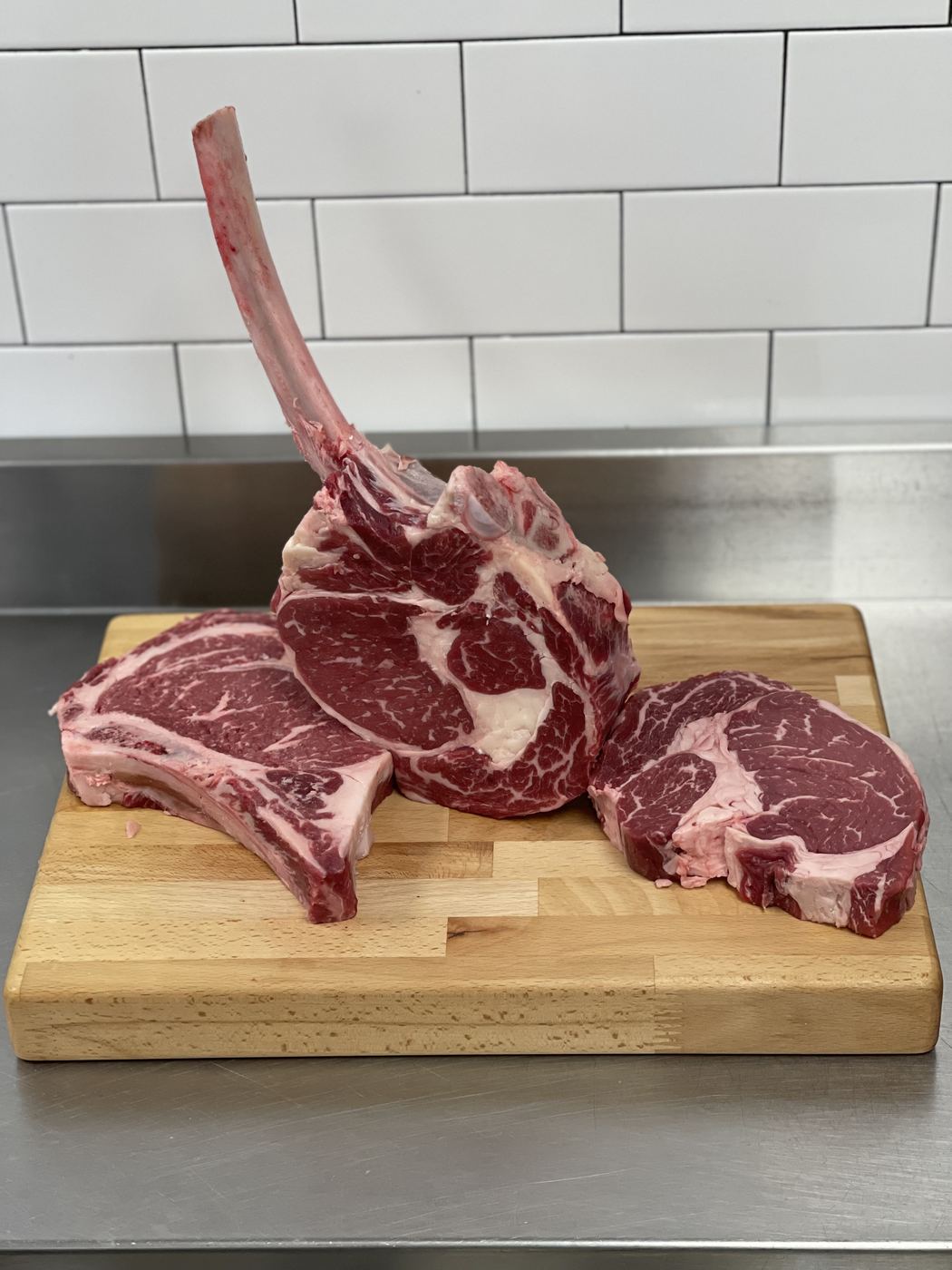

Beef chuck is the best all-purpose cut for stews because it balances collagen, marbling, and price better than any other option at the meat counter. It’s what most butchers reach for and what test kitchens like Serious Eats keep landing on when they run side-by-side braises. If you want a slightly different personality in your pot, a few other cuts earn their place:
- Beef shank (shin): Loaded with collagen, needs the longest cook, rewards patience with a rich, sticky broth.
- Short ribs: Deep, beefy flavor and consistent texture, but you’re paying for bone weight too.
- Brisket point: Fattier half of the brisket, built for long, moist cooking (skip the flat).
- Oxtail: Small bones, big gelatin payoff, best for a luxury-style stew.
- Round: Lean and budget-friendly, but needs careful cooking to avoid drying out.
Most stew recipes call for a 2 to 3 hour simmer, and Canada Beef’s guidance backs that range up for collagen-rich cuts.
Pro Tip: Skip the pre-cut “stew meat” tray when you can. Buy a whole boneless chuck roast and cube it yourself. You control the size, trim out the gristle you don’t want, and skip the mystery-origin scraps some packs contain.
Key Takeaways
Beef chuck delivers the most reliable balance of collagen, marbling, and price for stew, while shank, short ribs, and oxtail reward patience with richer, gelatin-thickened broth.
| Point | Details |
|---|---|
| Default to chuck | It balances flavor, collagen, and price better than any other stew cut for most cooks. |
| Buy whole, cut yourself | A whole boneless chuck roast cut into uniform cubes beats inconsistent pre-cut stew meat packs. |
| Match cut to patience | Shank and oxtail need up to 3 hours; chuck and round are usually done in 2 to 2.5 hours. |
| Sear before simmering | Browning the meat first builds flavor a plain simmer never develops. |
| Ask your butcher | Patsprimecuts custom-cuts boneless chuck roast and portions short ribs to your exact stew needs. |
Table of Contents
- What To Buy: Stew Meat Vs. Whole Roasts
- Cut-By-Cut Comparison: Which Beef Works Best For Stew?
- How To Cut And Prep Beef For A Stew
- How Long Does It Take To Cook Beef For Stew?
- Why Stew Fails And How To Fix It Fast
- Butcher’s Corner: What Pat’s Prime Cuts Recommends
- Storing And Reheating Beef Stew The Right Way
- Popular Stew Styles And Their Best Cuts
- Why The “Just Grab Stew Meat” Advice Falls Short
- Get Stew-Ready Beef Cut Exactly Your Way
- Frequently Asked Questions
- Sources
What To Buy: Stew Meat Vs. Whole Roasts
Retail packages labeled “stew meat” are convenient, but they’re often assembled from trimmings off several different cuts. That means one cube might be well-marbled chuck and the next might be a stringy scrap of round, and The Kitchn has pointed out that this inconsistency is exactly why stew meat produces uneven results: some pieces turn fork-tender while others stay chewy in the same pot.
Buying a whole roast and cutting it yourself fixes that problem. You see exactly what you’re working with, and you can size every cube the same.
Here’s what to check before you buy, whether you’re at a supermarket case or a butcher counter:
- Look for “webbing,” thin threads of fat and connective tissue running through the meat rather than one giant slab of fat on one side.
- Color should be a bright cherry red, not a dull, tepid brown.
- Avoid cuts with large solid pockets of hard white fat that won’t render down during cooking.
- If a package feels slippery or smells sour, put it back.
On quantity, plan a moderate amount of raw, boneless beef per person for a hearty main-course stew. If you’re buying bone-in short ribs or oxtail, add extra weight to account for bone loss. A rack of short ribs includes a significant bone weight, so a recipe that calls for a given amount of meat may require buying more bone-in product.
Price tells its own story here. Chuck and round run cheaper per pound because they’re higher-yield, boneless cuts. Short ribs and oxtail cost more per pound, but you’re buying flavor and gelatin along with the bone, and a small amount goes a long way in a mixed pot.
Pro Tip: When you’re at a real butcher counter, ask specifically for boneless chuck roast and request the cubes be cut uniformly. A good butcher will do this on the spot at no extra charge, and it saves you the knife work at home.
Cut-By-Cut Comparison: Which Beef Works Best For Stew?
Not every tough cut behaves the same way in a pot. Some throw off more gelatin, some cook faster, and some need real patience before they’re worth eating. MasterClass’s rundown of stew cuts lists chuck, shank, brisket, short ribs, oxtail, and round as the standard lineup, and each one has a distinct personality once it hits a simmer.
A few notes behind those numbers:
- Chuck stays the reliable middle ground. It has enough marbling and connective tissue to go tender without needing three hours of babysitting.
- Shank takes longer because the collagen concentration is so high, but the payoff is a broth that thickens on its own as that collagen breaks down into gelatin.
- Short ribs are worth the extra cost when you want a stew that tastes like a special occasion. Butchers note the tradeoff is straightforward: more flavor and richness, but you’re paying for bone you won’t eat.
- Brisket works best when you specifically ask for the point half. Butchers interviewed for Eat This, Not That’s roundup recommend the point over the flat for braising because its extra fat keeps it from drying out over a long cook, something the leaner flat can’t match.
- Oxtail produces one of the richest broths of any cut on this list, largely because of how much connective tissue surrounds those small bones. It’s slower and pricier per usable ounce, but a little goes far in a mixed-cut stew.
- Round is the budget option. It’s lean, which means less gelatin and a real risk of drying out if you overcook it or don’t give it enough liquid.
One thing that trips up a lot of home cooks: tender steak cuts like ribeye, sirloin, or tenderloin have almost none of the connective tissue that makes a stew work. Long, moist cooking turns them dry and stringy instead of soft, which is why they’re a mistake here even though they’re excellent for a quick sear.
If you want the best of both worlds, mix cuts. Combine chuck with a smaller amount of oxtail or shank, and you get the reliable texture of chuck with a broth boosted by extra gelatin from the richer cut.

How To Cut And Prep Beef For A Stew
Getting the meat into the pot right matters almost as much as which cut you chose. Here’s the sequence that gets the best texture:
- Cut into uniform 1.5 to 2 inch cubes. Even sizing means every piece finishes tender at roughly the same time, instead of some pieces turning to mush while others stay tough.
- Trim selectively, not aggressively. Cut away large, hard chunks of fat and heavy silverskin, but leave the thin marbling and small connective tissue strands alone. That’s what melts into gelatin.
- Salt ahead if you have time. Salting cubes 40 minutes to overnight before cooking draws out moisture that then reabsorbs with the salt, seasoning the meat deeper than a last-minute sprinkle.
- Sear in batches, never crowded. Give each piece space in a hot pan so it browns instead of steaming. Searing builds Maillard flavor that plain simmered beef never develops on its own.
- Deglaze the pan. Those browned bits stuck to the bottom carry real flavor. A splash of wine or stock loosens them straight into your braising liquid.
Pro Tip: Keep your knife cold and sharp when cubing beef. A dull, warm knife tears the fibers instead of slicing them cleanly, which leaves ragged edges that shred apart during a long simmer.
How Long Does It Take To Cook Beef For Stew?
Different cooking methods reach fork-tender at different speeds, and matching your method to your timeline saves you from either an underdone dinner or a mushy one.
A few method-specific notes worth knowing:
- Keep the liquid at a gentle simmer, not a rolling boil. A hard boil toughens muscle fibers faster than it breaks them down, and it can scorch the pot bottom.
- Cover the pot for most of the cook, then remove the lid in the last 20 to 30 minutes if you want the sauce to reduce and thicken naturally.
- The real test for doneness isn’t time on the clock, it’s texture. A fork should slide into the meat with almost no resistance and the cube should pull apart easily rather than staying firm at the center.
- Collagen-rich cuts like shank sometimes need the full three hours to fully break down, so check individual pieces rather than assuming the whole pot is done at once. Pull tender cubes out with a slotted spoon and let the tougher ones keep cooking.
If a batch ends up slightly undercooked, just return it to the heat for another 20 to 30 minutes; there’s no harm in extending a braise. If it’s gone the other way and started falling apart into shreds, pull the meat out entirely, reduce the sauce on its own, then fold the meat back in right before serving so it doesn’t break down further.
Pro Tip: Test more than one cube before declaring the pot done. Even with uniform cutting, the piece closest to the pot’s edge often cooks faster than one buried in the center.

Why Stew Fails And How To Fix It Fast
Most stew disasters trace back to one of a handful of repeat mistakes:
- Using tender steak cuts like sirloin or tenderloin instead of a collagen-rich cut, leaving the meat dry and stringy.
- Boiling instead of simmering, which toughens the fibers before they get a chance to soften.
- Skipping the sear, which leaves the whole stew tasting flat and one-note.
- Cutting cubes in wildly different sizes, so some pieces overcook while others stay underdone.
- Relying on a pre-cut stew meat tray with mixed, unpredictable cuts inside.
If your sauce turns out thin, don’t add more flour mid-simmer and hope for the best; pull the meat out, reduce the liquid on high heat until it thickens, then return the meat. If some pieces are clearly tougher than others partway through cooking, that’s usually a sign the pack had mixed cuts. Remove the tender ones now and let the rest keep going. And if something smelled off or looked gray and dull at the store, that’s your cue before you ever get to the stove: don’t cook it, return it.
Pro Tip: Keep a slotted spoon by the pot during the last hour. Pulling pieces as they finish, rather than waiting for the whole batch to hit the same point, is the single easiest fix for uneven stew meat.
Butcher’s Corner: What Pat’s Prime Cuts Recommends
Ask for a boneless chuck roast and have it cubed to a consistent size right at the counter. That one request solves most of the texture problems home cooks run into, and it costs nothing extra.
That’s standard advice from the counter at Patsprimecuts, and it holds up cut after cut. If you’re after a richer stew, ask specifically for the point cut when buying brisket, since it carries more fat than the flat and holds up far better through a long braise.
A few ways the shop can help beyond the basic cube:
- Custom-cut a boneless chuck roast to your exact size specification.
- Portion short ribs for a richer, bone-in stew.
- Provide stew-ready cuts for catering orders when you’re feeding a crowd.
Storing And Reheating Beef Stew The Right Way
Cool leftover stew within two hours of cooking and refrigerate it, where it keeps well for three to four days; freeze it if you need longer storage.
- Thaw frozen stew in the fridge overnight rather than at room temperature.
- Reheat gently on the stovetop with a splash of stock or water stirred in, since the sauce thickens as it chills and needs loosening back up.
- Avoid a hard microwave blast, which can toughen the meat unevenly; a low, slow reheat keeps texture closer to fresh.
One quirk worth knowing: gelatin-rich stews firm up almost like jelly in the fridge. That’s the collagen doing exactly what it’s supposed to. It loosens right back into a silky sauce the moment it’s warmed.
Popular Stew Styles And Their Best Cuts
Different stew traditions call for different cuts, and matching the two makes a real difference in the final dish.
- Beef bourguignon: Chuck or short ribs, paired with red wine, pearl onions, and mushrooms.
- Osso buco style: Shank, simmered with tomatoes, white wine, and gremolata for brightness.
- Slow-simmered oxtail stew: Oxtail alone, built around a long braise with root vegetables and a deep, sticky broth.
- Hearty pot roast hybrids: Brisket point, cooked with beef stock, carrots, and potatoes for a heartier, less saucy result.
Reach for short ribs or oxtail when you want a stew that feels like an occasion. Reach for chuck or round when you’re feeding a family on a weeknight budget.
Why The “Just Grab Stew Meat” Advice Falls Short
The conventional wisdom stops at “use tough cuts,” and that’s not wrong, it’s just incomplete. What most guides skip is that tough isn’t the same as reliable. Round is tough and lean, and it dries out faster than most cooks expect. Chuck is tough and well-marbled, which is exactly why it outperforms round even though both get filed under “stew meat” at the store.
The bigger gap is in the buying step, not the cooking step. Most home cooks lose the game before the pot ever heats up, by grabbing a tray labeled “stew meat” without asking what’s actually in it. A whole roast, cubed at home or by your butcher, gives you control that a pre-packaged tray never will.
If there’s one thing to prioritize first, it’s this: buy a specific, named cut, not a generic label. Chuck for reliability, shank or oxtail if you’re willing to wait, short ribs if you want to impress someone. The recipe matters less than the meat you start with.
Get Stew-Ready Beef Cut Exactly Your Way
Most grocery meat counters give you two choices: a mystery tray labeled “stew meat” or a whole roast you have to cube yourself with a dull kitchen knife. Patsprimecuts skips both problems. Ask for a boneless chuck roast cut into uniform cubes at your requested size, no extra charge, no guesswork about what cut you’re actually getting.

Want something richer for a special dinner? The shop also portions short ribs bone-in, ready for a long braise, and can prep stew-ready cuts for catering orders when you’re cooking for a crowd. Stop by the counter in Georgetown or call ahead with the cut and cube size you need, and pick up beef that’s ready to sear the same day.
Frequently Asked Questions
What is the best beef for stews?
Beef chuck is the best all-around choice because it has the right ratio of marbling and connective tissue to become tender and flavorful over a long, slow cook without costing a premium.
Is chuck or round better for beef stew?
Chuck outperforms round for stew because it carries more marbling and connective tissue that breaks down into gelatin. Round is leaner and cheaper but dries out more easily if overcooked.
Can you use beef shank instead of chuck for stew?
Yes. Shank produces one of the richest, most gelatin-heavy broths of any cut, but it needs up to three hours of simmering compared to chuck’s two to two and a half hours.
Why shouldn’t I use steak cuts like sirloin for stew?
Tender steak cuts lack the connective tissue that breaks down during long, moist cooking. Instead of softening, they dry out and turn stringy.
How much beef should I buy per person for stew?
Plan on roughly a third to half a pound of boneless beef per person, and add extra weight if you’re buying bone-in cuts like short ribs or oxtail.
How long does beef stew meat need to cook to get tender?
Most cuts reach fork-tender in 2 to 2.5 hours on a stovetop braise, while collagen-heavy cuts like shank or oxtail can take up to 3 hours.
Sources
- The Best Cut of Beef for Stew, According to Tests
- Why stew meat isn’t actually the best choice for stews
- 4 Best Store-Bought Meat for Fall Stews, According to Butchers
- Stewing beef know-how


