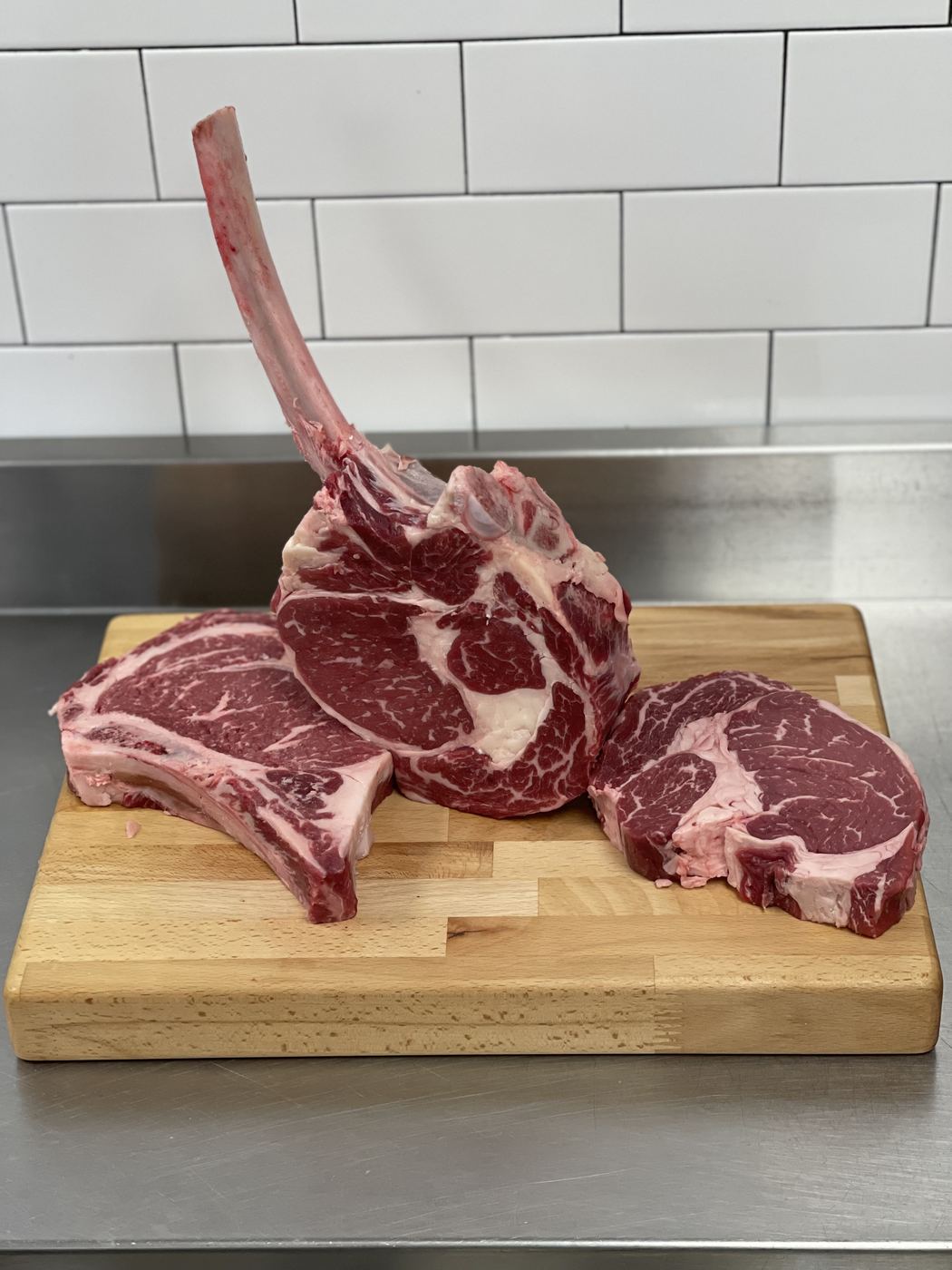

For a home BBQ, ribeye and striploin are reliable choices for a classic steak, top sirloin is a leaner option, and skirt or flank suits fajitas and thin slices. Choose the cooking method by cut and thickness: direct heat for thinner steaks, a hot and cool zone for thicker ones, and a thermometer for the final temperature. Pat’s lists these cuts online; specialty cuts such as hanger and tri-tip are worth asking about rather than assuming they are in stock.
TL;DR:
- Ribeye and striploin are versatile grilling choices; thicker steaks can benefit from two-zone cooking or reverse searing.
- Rib and loin cuts are often tender, while cuts from the chuck, round, flank, and plate need cut-specific trimming, cooking, or slicing; some are better braised than grilled like a steak.
- Match direct heat, two-zone cooking, or reverse searing to the cut and thickness. Health Canada lists 145°F (63°C) for medium-rare beef steaks and 160°F (71°C) for medium.
- Compare marbling and the stated Canadian grade when shopping; flank and skirt can also grill well when cooked appropriately and sliced against the grain.
- Tell the butcher your cooking method, desired thickness, trimming preferences, and guest count so the available cuts fit your plan.
Table of Contents
- Steak Cuts Explained: Where Each One Comes From on the Animal
- Different Steak Cuts: A Cook-by-Cook Breakdown for the Grill
- How to Grill Steak: Direct Heat, Two-Zone, and Reverse Sear
- Seasoning, Trimming, and Slicing for Better Steaks
- Butcher Buying Tips: How to Order the Right Steak for the Grill
- The History Behind How Steak Cuts Got Their Names
- Steak Cut Alternatives: What to Substitute When Your First Choice Isn’t Available
- Nutritional Information for Popular Steak Cuts
- Cost Comparison: Where Each Steak Cut Falls on Price
- Regional Traditions: How Different Cultures Cook Their Steak Cuts
- A Local Butcher’s Take on Choosing the Right Steak
- Ready to Grill? Here’s How to Order Your Steaks
- Sources
Steak Cuts Explained: Where Each One Comes From on the Animal
Steak cuts come from different primal sections of the animal, and location helps explain tenderness and grain. Muscles near the spine, in the loin and rib, do relatively little work and are often tender. Working muscles in the chuck, round, flank, and plate can have coarser grain or more connective tissue, so the exact cut and trimming matter as much as its primal name.
That relationship between muscle use and tenderness is a useful starting point, though it is not a complete cooking rule. Serious Eats’ grilled-steak guide explains why rib and loin cuts are common quick-cooking choices, while some chuck and round cuts need different preparation.
Here is a quick map of the primals and what each one typically hands you at the counter:
- Rib – ribeye, prime rib, tomahawk steak
- Loin (short loin and sirloin) – New York strip, tenderloin, T-bone, porterhouse, top sirloin
- Chuck – flatiron, chuck-eye, Denver steak, boneless blade
- Round – eye of round, top round, sirloin tip
- Flank – flank steak
- Plate – skirt steak, hanger steak
- Brisket – whole brisket, brisket point
- Shank – osso buco, shank cross-cuts
Marbling is another factor. Intramuscular fat contributes flavor and perceived juiciness, but thickness and cooking method still matter. A marbled ribeye tolerates a hot grill differently from lean tenderloin or eye of round; ask which method suits the specific cut in your hand.
Different Steak Cuts: A Cook-by-Cook Breakdown for the Grill
This is where a steak cuts chart earns its keep. Below, each cut gets the practical detail that actually changes how you cook it: where it sits on the animal, what the fat and grain are doing, and which grilling method suits it best.
Ribeye

Cut from the rib primal, ribeye is a popular grilling steak because of its marbling and rich flavor. Its fat can also cause flare-ups, so keep a cooler zone ready. A chef quoted by Eat This, Not That names ribeye among his grilling picks alongside hanger, tri-tip, and steak tips.
Grill it over direct heat if the steak is thin enough for the center to cook before the outside scorches. For a thick bone-in ribeye or tomahawk, use a two-zone or reverse-sear setup. Check the center with a thermometer; Health Canada lists 145°F (63°C) for medium-rare beef steak. Rest briefly before slicing. Watch for flare-ups as fat drips onto the flame, and move the steak to the cooler zone if needed.
New York strip (striploin)
The strip comes from the short loin, right next to the tenderloin, and it splits the difference between the two neighbors: firmer bite than tenderloin, usually less marbled than ribeye, but a clean, beefy flavor that holds its own. Pat’s lists it as a striploin steak. Direct heat can work for a thinner piece; use a cooler zone as needed when the outside browns before the center is done. Check for 145°F (63°C) medium-rare under Health Canada guidance, rest, and slice against the grain.
Tenderloin (filet mignon)
Tenderloin is one of the most tender beef cuts and is relatively lean. Its mild flavor can work with a compound butter or pan sauce. For a thick tenderloin steak, sear it on a two-zone grill, then finish over indirect heat if needed. Check the center for the applicable final temperature; do not assume resting will add a fixed number of degrees.
T-bone and porterhouse

Both cuts straddle two muscles: strip on one side of the bone, tenderloin on the other. A porterhouse carries a larger portion of tenderloin than a T-bone. The two sides may cook at different rates. A two-zone fire lets you keep the tenderloin side farther from the strongest heat, while a reverse sear is another option for a thick piece. Check the temperature in the thickest part of each muscle without touching bone.
Flatiron, Denver, and chuck-eye
These three come from the chuck, but their trimming and texture differ. Flatiron can grill well once the tough central seam is removed; Denver and chuck-eye can also suit steak-style cooking when properly prepared. They are specialty examples here, not products listed in Pat’s current online catalog. Pat’s does list boneless blade steak, a different chuck cut; ask how that specific piece should be cooked rather than treating it as interchangeable with flatiron.
Hanger, skirt, and flank
These cuts share a useful approach: cook with close attention and slice thinly across their visible grain. Skirt and hanger come from the plate area; flank is a separate primal. Their shapes and fat levels differ, so use a recipe for the exact cut you buy. BBC Good Food’s cut guide compares several of these steak styles.
Quick reference: Thickness is a guide to method, not a fixed cooking rule. Direct heat can suit thin steaks, while a two-zone or reverse-sear approach gives a thick steak time to reach its target without burning outside. See our steak thickness guide for cut-by-cut considerations.
Hanger steak has an intense beef flavor but is not listed in Pat’s current online catalog. Pat’s does list skirt steak and flank steak; both can work for tacos, fajitas, and salads when sliced thinly across the grain after resting. For another loose-grained cut and its cooking method, read our bavette steak guide; call ahead if you specifically want bavette, since it is not listed in the catalog.
Tri-tip and sirloin
Tri-tip is a triangular cut from the bottom sirloin whose grain changes direction, so check the grain before slicing. A thick tri-tip can suit a staged cook, but it is not listed in Pat’s current online catalog. Pat’s does list top sirloin steak, a leaner option for grilling. Ask for the thickness you need, then check the center temperature rather than relying on a fixed number of minutes.
Short ribs
Pat’s lists short ribs as a slow-cooking cut. For the grill, its Korean Style Short Ribs are listed as cross-cut. Confirm thickness and any marinade at the counter, then follow a recipe suited to the cut; do not assume every short rib package is thin enough for a quick direct sear.
How to Grill Steak: Direct Heat, Two-Zone, and Reverse Sear
Choose a method based on the cut, shape, thickness, and your grill. Thin, quick-cooking cuts can suit direct heat; thicker steaks may need a hot zone for browning and a cooler zone for finishing. Our two-zone grilling guide explains the setup.
Direct sear, step by step:
- Keep the steak refrigerated until you are ready to prepare it, then pat it dry.
- Preheat the grill and set aside a cooler zone in case the outside browns before the center is ready.
- Season and place the steak directly over the flame.
- Sear both sides, flipping as needed; move the steak to the cooler zone if the surface browns too quickly.
- Check internal temperature with an instant-read thermometer inserted horizontally into the thickest part.
- Confirm the applicable final temperature, then rest before slicing.
Reverse sear, step by step:
- Set up a two-zone fire with a cooler indirect side and a hot direct side.
- Cook the steak on the indirect side until its center approaches the target temperature, leaving room for the finishing sear.
- Move it to the hot side to brown both surfaces, then recheck the thickest part.
- Once the applicable final temperature is reached, rest before slicing.
For beef steaks and other whole cuts, Health Canada lists 145°F (63°C) for medium-rare, 160°F (71°C) for medium, and 170°F (77°C) for well done. Check the center of the thickest part without touching bone; insert the probe from the side when a steak is thin. Resting can change the temperature, but the rise is not fixed, so verify the final result. See our safe meat temperatures guide for other meat types.
Pro Tip: If fat causes a flare-up, move the steak to the cooler zone until the flames subside. Keep the grill attended and avoid spraying water onto a grease flare-up.
Seasoning, Trimming, and Slicing for Better Steaks
Salt either just before grilling or well ahead of time. If you season in advance, keep the steak refrigerated; giving it roughly 40 minutes or longer allows surface moisture to be reabsorbed and the exterior to dry. Pat the surface dry before cooking. This dry-brine approach can be useful on thicker cuts such as ribeye.
Marinades can add flavor to cuts such as flank and skirt, but they do not replace appropriate cooking and thin slicing across the grain. An acidic marinade affects mainly the surface; follow a cut-specific recipe and marinate in the refrigerator. Ribeye or tenderloin can also be served simply with salt, pepper, and an optional finishing sauce.
Trimming decisions depend on the cut:
- Ask whether a thick external fat edge on striploin or sirloin should be trimmed for your grill setup.
- For chuck cuts, confirm the precise steak and whether a tough central seam or connective tissue needs removing.
- If a fat edge makes a steak curl, small shallow scores can help it lie flat; avoid cutting into the meat.
When slicing steak to serve, cut across the grain. This matters most for long-grained cuts such as skirt, flank, and hanger: identify the fiber direction first, then slice perpendicular to it in thin strips. For thicker, more tender cuts such as striploin or ribeye, slice to the serving size you prefer.
Butcher Buying Tips: How to Order the Right Steak for the Grill
Choosing a steak starts before you fire up the grill. A short conversation with your butcher can clarify the cut, thickness, and preparation that fit your plan.
Tell your butcher how you plan to cook the steak and what thickness you need. A roughly 1 to 1½-inch ribeye or striploin can be a useful starting point for many home grills; skirt and flank have different shapes and are best discussed by cut. For a T-bone or other uneven steak, ask how to position it over the hot and cool zones rather than assuming both muscles will cook identically.
Ask about marbling and the grade actually shown for the beef. In Canada, Canada Prime, Canada AAA, and Canada AA are distinct grades with different marbling levels; USDA Choice is a separate U.S. designation. Our Canadian beef grades guide explains what the labels mean when shopping in Ontario. Confirm the grade, origin, and current price for the particular cut you are considering.
A few more things worth asking:
- Which direction does the grain run on this skirt or flank, and can you trim it accordingly?
- Should the fat cap stay on or come off for this particular cut?
- Can portions be cut to a specific weight if you’re grilling for a crowd or catering an event?
- Are the listed Korean Style Short Ribs available today, or can you source a specialty cut such as tri-tip or hanger?
The History Behind How Steak Cuts Got Their Names
Names vary by region and butcher. “New York strip” is commonly called striploin in Canada, while filet mignon comes from the tenderloin. A T-bone and a porterhouse both contain strip and tenderloin; the porterhouse has a larger tenderloin section. These names help you confirm the actual cut before choosing a cooking method.
Flatiron is cut from the top blade after its central connective-tissue seam is removed; an ordinary blade steak is not automatically the same thing. Hanger, skirt, and flank are separate cuts with distinct shapes despite being grouped together in many grilling guides. If a recipe uses an unfamiliar name, ask the butcher which muscle and trim it means.
Steak Cut Alternatives: What to Substitute When Your First Choice Isn’t Available
Several cuts have useful alternatives, though they will not cook or taste exactly alike. Ask about substitutions when your first choice is unavailable or your cookout has a firm budget.
If ribeye is unavailable, ask about a rib steak for a bone-in ribeye experience or choose striploin for a different balance of fat and chew. Top sirloin can replace striploin when a leaner steak suits your recipe. Tenderloin has a distinct texture; a flatiron is a different cut and may require different trimming and cooking.
For tacos or fajitas, skirt and flank can often stand in for each other, but adjust cooking time for the piece’s shape and thickness. Hanger is another possibility if your butcher has it. Korean Style Short Ribs are a different, bone-in option and need a recipe written for that cut. If a tri-tip recipe is your starting point, discuss top sirloin with the butcher and adjust the method for its different shape and grain.
Bone-in versus boneless is its own choice. Pat’s lists boneless ribeye as well as bone-in rib steak and tomahawk. Thickness and shape matter more than the presence of a bone alone, so check each steak with a thermometer rather than assuming one version always cooks faster.
Nutritional Information for Popular Steak Cuts
Fat content varies by cut, grade, trimming, and portion size. Tenderloin and top sirloin are often leaner choices than a visibly marbled ribeye, but a specific steak’s nutrition depends on how much external fat remains and how it is prepared.

Ribeye is commonly well marbled, while striploin often has a firmer bite and a visible fat edge. Flank is generally lean, but skirt can carry more fat depending on the piece and trim; do not treat the two as nutritionally identical. Marinades and sauces also change the finished meal.
Chuck steaks vary substantially: a properly trimmed flatiron is not nutritionally or culinarily interchangeable with every blade steak. For a useful comparison, check the specific product’s nutrition information or ask the butcher about trimming and portion size instead of relying on a generic cut chart.
Cost Comparison: Where Each Steak Cut Falls on Price
Prices change with grade, origin, trim, and availability, so a fixed cheapest-to-most-expensive list would be unreliable. Tenderloin and ribeye often command a premium, but ask for the current price per pound and expected yield for the cut you plan to serve.
Compare striploin, T-bone, porterhouse, and top sirloin by price per serving as well as sticker price. Bone-in steaks include bone weight; a thinner skirt or flank steak may feed a group differently once sliced for tacos or salads.
For a crowd, tell the butcher your guest count and budget. Ask which currently available cuts can be portioned for the menu rather than assuming chuck-eye, blade, skirt, flank, or short ribs will always be the lowest-cost choices.
Regional Traditions: How Different Cultures Cook Their Steak Cuts
Regional traditions show how cutting changes the cooking method. Argentine asado includes cuts such as vacío and asado de tira, with ribs cut across the bones for grilling. The same animal section can be portioned and cooked differently depending on the recipe.
Korean galbi often uses thin, cross-cut short ribs marinated before grilling; confirm the thickness and marinade of the package you buy. Brazilian churrasco often features picanha, the rump cap, cooked with its fat cap. These methods are useful examples, though Pat’s current online catalog does not list every cut mentioned here.
For an Ontario backyard grill, the practical lesson is to match the method to the cut in front of you. Pat’s lists ribeye, striploin, skirt, flank, and cross-cut Korean Style Short Ribs; ask what is available for your date and use a recipe suited to the cut and thickness.
A Local Butcher’s Take on Choosing the Right Steak
The useful question at the counter is not simply which steak is “best,” but which cut suits your grill, serving plan, and budget. A boneless ribeye or striploin can be straightforward choices for a classic steak dinner; skirt or flank makes more sense when you want thin slices for fajitas.
Pat’s lists hand-cut steaks and house marinades in Georgetown. Ask which cuts and thicknesses are available, whether trimming is needed, and what will fit your guest count. For a larger event, discuss portions and preparation with the shop before settling on a menu.
Ready to Grill? Here’s How to Order Your Steaks
Once you know the cut and method you want, ask about availability, thickness, trimming, and portions. Pat’s lists several of the grilling cuts covered above and offers custom-cut requests. Browse the beef selection, then call the Georgetown shop to confirm what can be prepared for your grill and pickup date.

If you choose skirt or flank, ask which house-made marinades are available and whether one suits your recipe. For a family cookout or larger event, discuss portions and lead time through Pat’s catering services. Call ahead before pickup so the cut and preparation can be confirmed.
Sources
- Safe cooking temperatures | Health Canada
- Graded for Greatness | Canada Beef
- Food Lab: How to Grill Steak — Cuts of Steak (SeriousEats)
- Best Cuts of Steak for Grilling, According to Chefs
- 8 cuts of steak and how to cook them | BBC Good Food


